
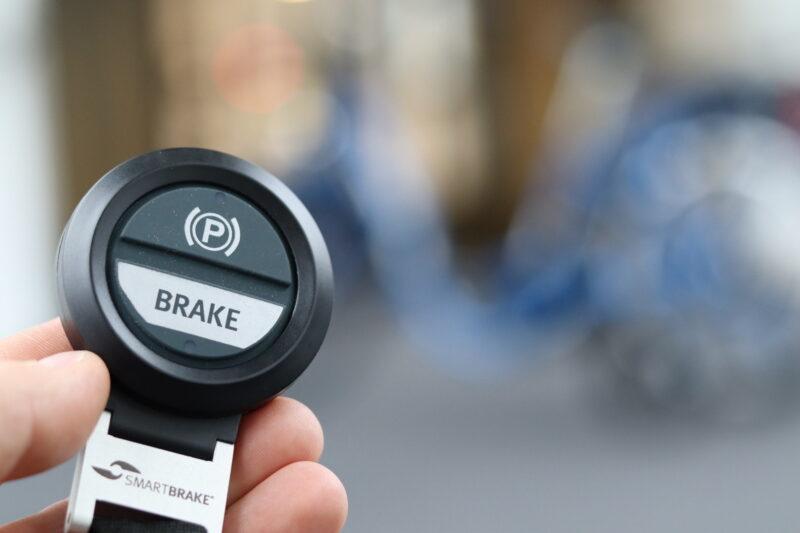
SmartBrake Wireless
Wireless operation with different controls. Braking is applied when the control is pressed.
SmartBrake
SmartBrake provides electronic bicycle brake controls, with different options for the rider and the possibility of companion control. It may be relevant when a rider needs help regulating speed, stopping more safely or receiving assistance from a companion in particular situations.
Needs vary. SmartBrake should be assessed for the person, bicycle, activity and surroundings in which it will be used.
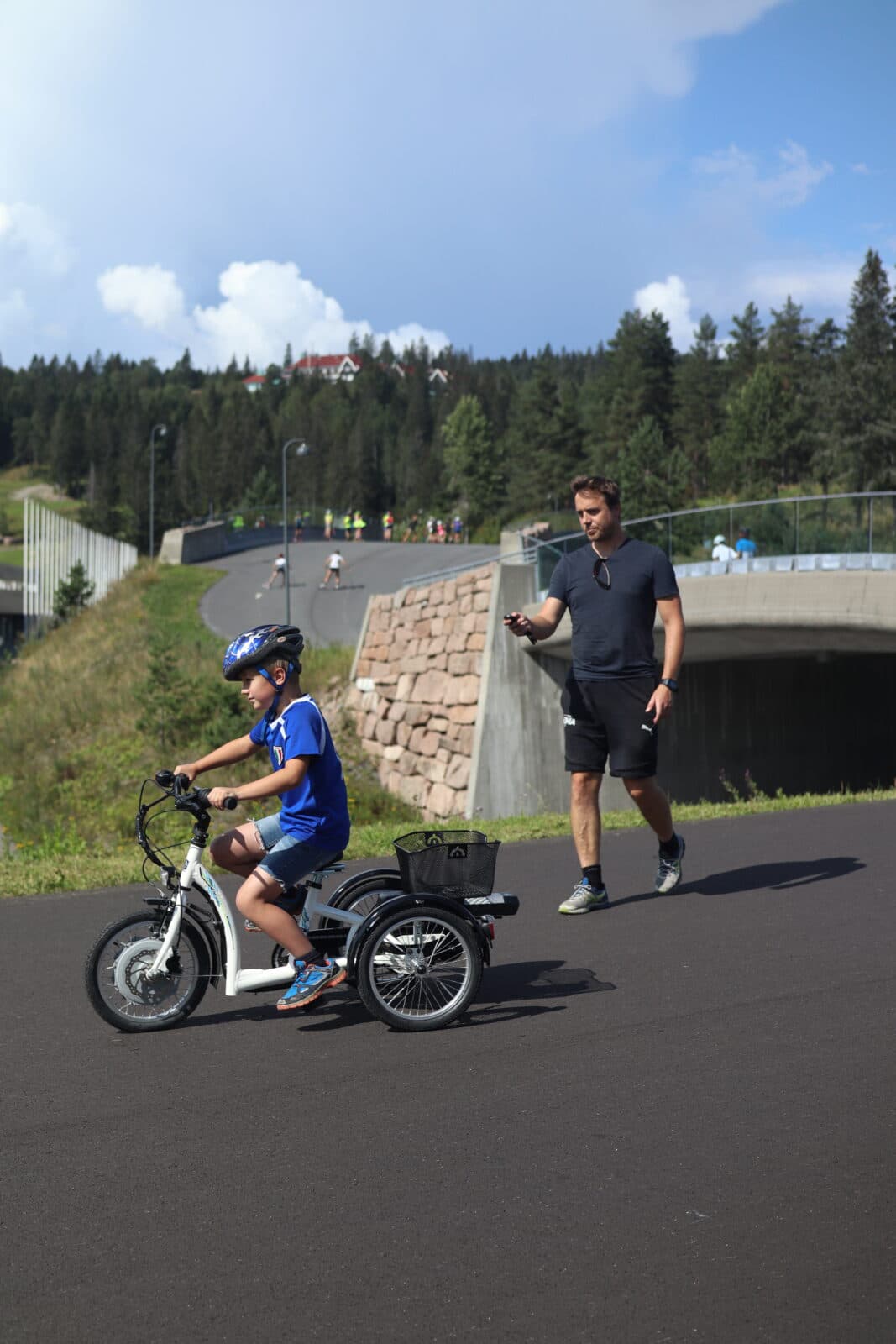
A child rides a tricycle while an adult follows with the remote control.
Three series
SmartBrake has three series with different ways to operate the brake. Compare the principles before the setup is assessed for the rider and bicycle.
Wireless operation with different controls. Braking is applied when the control is pressed.
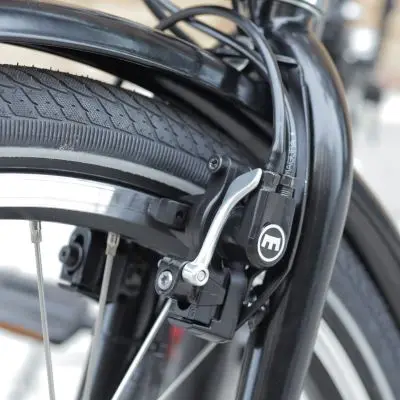
Combines a hydraulic brake lever for the rider with wireless operation by a companion.
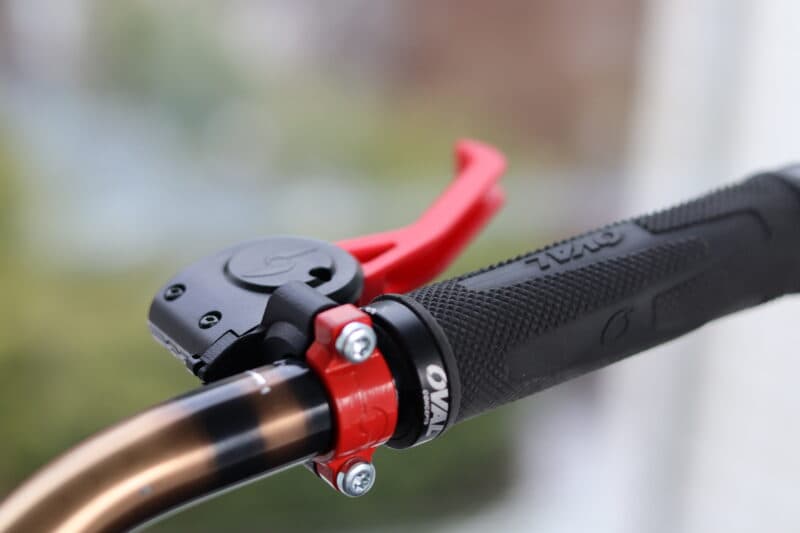
A different operating principle: braking is applied when the grip on the control lever is released.
Choosing and obtaining equipment
The process depends on the country and who supplied the equipment. Choose the area that applies to you.
We can help assess the product and setup or find a distributor in your country. Availability, installation and any public funding must be checked locally.
Use the builder where available, or briefly describe what you need help with. Include the delivery country.
A local distributor may help with products and servicing. If you cannot find one, contact SmartGroup.
Clarify compatibility, adaptations, installation, price and delivery before ordering.
Help with braking
Hills, junctions and stopping can be challenging on a ride. Some riders need a different brake control; others need a companion who can help.
SmartBrake lets the rider or a companion operate the brake electronically. The choice of controls must take the rider’s needs and the bicycle into account.
SmartBrake may be relevant when a rider needs help maintaining a safe, steady speed.
The system may help make stopping more predictable and easier to manage.
In some situations, another person may need to help control speed or stopping.
Help with braking may allow the rider to practise with others.
Before choosing a system
Describe where and how the bicycle will be used. This helps us assess whether SmartBrake may be suitable.
The aim might be to cycle with family, join an activity, practise new skills or gain more freedom in everyday life.
Identify where difficulties arise: on slopes, at junctions, on uneven ground or when stopping the bicycle.
SmartBrake must be assessed alongside the bicycle’s construction, braking system and intended use. A mechanic or distributor may need to be involved.
Plan installation, positioning and operation before using the system.
SmartBrake Builder
The builder helps you gather the key information before contacting us. You do not need to know the product or have every answer in advance.
Public product information
Finnhjelpemiddel provides publicly registered product information, agreement details and other relevant information about the assistive equipment.
Questions and answers
These answers provide an introduction. An individual and technical assessment may still be needed.
SmartBrake may be relevant when a rider needs better control over speed or stopping. It must be assessed for the rider’s needs, bicycle, activity and surroundings.
Not necessarily. Bicycle type, brakes, positioning and use must be assessed before installation. A mechanic or distributor can help with the technical assessment.
The rider, family, therapist, mechanic, distributor or other professionals may be involved. Who takes part depends on the needs and situation.
Describe the bicycle, how the brake will be operated and what you need help with. SmartGroup can answer product questions and explain who can provide a quote and installation.
Public product information is available on Finnhjelpemiddel. Mechanics and distributors can also contact SmartGroup for technical documentation, installation information and support.
Needs, activity and equipment
Read about equipment, adaptations and practical use.